
I’ve long admired the tradition of leaders calling in the neighborhoods, elders, or intersections that raised them, and the pride associated with a sense of community. As someone who has moved almost too many times to count (20!) since first rooting myself in Chicago in the mid-90s, and whose own family spans three continents, I think a lot about place, people, and what shapes us.
Prior to my role with the Healthy Communities Foundation, I spent longish stretches of time in various Chicago neighborhoods, driven by the desire to reimagine school and community spaces for the sake of the health and well-being of youth and families. I spent the better part of nearly two decades in many roles, both institutional and grassroots, spanning all corners of Chicago’s grid system. This meant I’ve spent lots of time with grandparents raising grandchildren, with school support staff going above and beyond their job descriptions, and with people and organizations who have shaped my sense of what’s possible when we come together with a shared vision and values. My work view has often overlapped various quality-of-life plans and other initiatives that take a long time for what communities need to thrive. A common thread I’ve seen that bolsters success is not just the depth of planning, but how these efforts center trust and cultivate relationships.
Rooted in Values
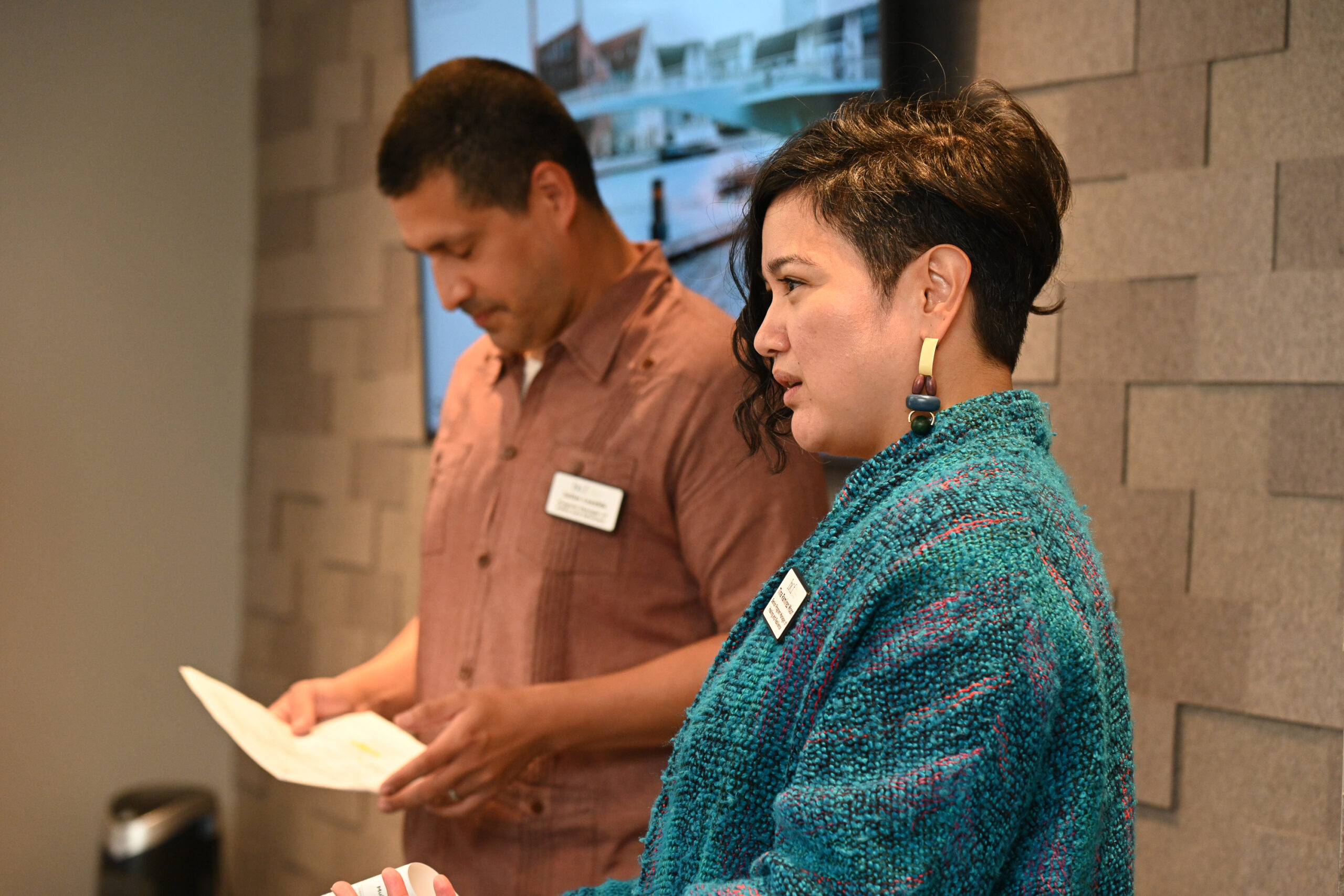
I first joined the Healthy Communities Foundation team at a pivotal time both in the organization’s history and my own career. In 2018, we had just launched the Foundation’s first strategic plan, tasked with putting a new mission, vision, and values into action. New to the field of philanthropy, I carried deep humility for what I knew (and didn’t) from prior nonprofit roles and what I hoped was possible by continuing to center the communities at the heart of our work. I was also embarking on a new season as part of the ‘panini’ generation, where early parenthood and caregiving for elder family members did not just form a ‘sandwich’ of responsibilities, but truly pressed my time and capacity. I know this phenomenon is common across many cultures, especially in Black, Asian, and Latine multigenerational households. Particularly since the pandemic, I’ve held close the sacred reminder that we never quite know what people may be holding and that people are our most precious resources.
Last year, I stepped into a new role with the Foundation as we experienced much transition and change, our communities having faced multiple and compounding health crises nearly every year since its inception. We shifted our partnerships and grantmaking to allow our small team to lean into longer-term commitments, a change we sought to communicate and implement with care. I also stepped into this role on the tender edge of grief, having just lost my 93-year-old father to Alzheimer’s.
I often think of something I learned during the pandemic: that our sense of the present goes beyond our own lifetimes and instead spans the full arc of both the oldest and youngest people in our lives. The conditions that compelled my father’s own migration to the U.S. from Colombia in the late 1960s are not dissimilar to what we see today. With that, I often think of the world my daughter and her peers will inherit: one where advances in technology fundamentally shift our relationships to each other, to work, and to the earth itself, while health and wealth inequities grow at a worrisome pace.
We must contend with the reality that our world will continue to change, and we have a role to play to dream up and shape a future that works for everyone.
Communities today continue to face ongoing uncertainty and direct attacks on our health and well-being. Nearly two years of federal actions have destabilized nonprofit service delivery and compromised the safety and security of families and public spaces. HCF, like many other funders, have sought to make sense of the violence and volatility experienced by nonprofits and communities: through trickle-down effect of massive federal layoffs, funding cuts, policy changes, and heightened immigration enforcement. I’m continuously in awe of the many leaders in our service region who remind us not only to tend to the needs of communities today, but to look beyond the horizon towards a vision of health and well-being for all.
I think of Alice Walker, who calls us to “look closely at the present you are constructing: It should look like the future you are dreaming.” In order to radically shift systems and address the root causes of health inequities, we must consider a longer arc of time.
Eyes on the Horizon
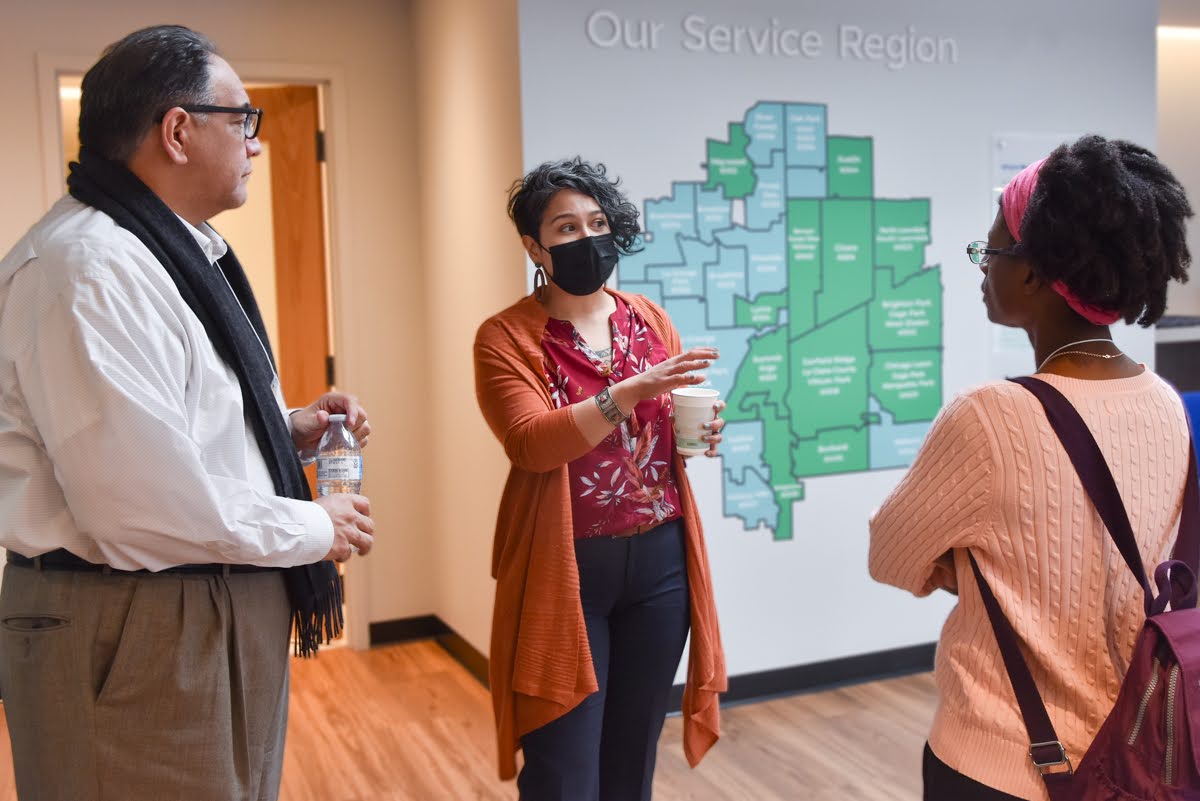
We at Healthy Communities Foundation have been wrestling with how we continue to advance health equity — where we expand access to what people need today — and also move in alignment with health justice — where we shift who holds power over the conditions and decisions that determine health. As we consider a longer-term horizon for our work, we continuously consider how the extended moment we are in shapes what we can mobilize by way of our resources and our relationships.
We know the work ahead will not be easy, but we trust the path emerging with our partners. This involves taking a closer look at the impact of our resources and relationships to build durable infrastructure for the future we collectively seek for our region. We also continue to reflect on a set of questions to help guide us now and for the long haul:
- What is our role and responsibility for our region as a partner and a funder? What are all the levers of power we can unlock in service to our vision and our communities?
- What does being responsive mean in this moment? How do our investments today actively construct what’s necessary for a future where all communities in our region can thrive?
- As healthcare safety nets are compromised due to structural funding issues and crumbling infrastructure – how might we expand our definition of community as a safety net?
- How do we continue to center relationships as a form of durable community infrastructure?
- How do we sharpen our understanding of the role of power and civic health to improve community health – especially the roles of organizing, narrative power and youth power?
I remain humbled by the work ahead and grateful for the many leaders and teachers who guide us. We continue to move at the speed of trust and relationships to shape a future that works for everyone.
About the Author
Tina Ramirez Moon (they/them) seeks to be rooted in right relationship and to center the wisdom and lived experience of people most impacted by issues in the policies, decisions, and solutions necessary for all people to thrive.
Tina joined the Healthy Communities Foundation program team in 2018, spearheading the Foundation’s Healing & Resilience framework to support local leadership, foster healing-informed organizational cultures and systems, and cultivate an interconnected and resilient health ecosystem. In 2025, Tina transitioned to Director of Programs, overseeing the development, implementation, and evolution of the Foundation’s grantmaking approach.