Our mental health is shaped by the world around us. Whether we feel safe, seen, and connected to the people and places in our lives has as much to do with our health as any diagnosis or treatment. Mental health cannot be separated from the structural conditions that shape daily life, like economic hardship, racism, and disinvestment. These are not personal failures, but policy outcomes that have made it harder for some communities to build connections, find care, and feel at home in their own neighborhoods. The experience of feeling unseen and underserved influences health and civic life.
Place, mental health, and civic engagement are deeply interconnected. They are shaped by the same conditions and healed by a shared sense of belonging.
In our service region, the communities most affected by mental health inequities are the same communities that have carried the weight of disinvestment for generations. Over 70% of the approximately 900,000 residents in our region are Black, Indigenous, Latine, and People of Color. These are communities of deep resilience, yet have been systematically underserved by mental health systems that were not designed with them in mind. In some parts of Chicago, there are fewer than one therapist per 5,000 people. This unequal access is a symptom of broader structural problems, not individual shortcomings.
In daily life, this looks like a neighbor who cannot find a therapist who speaks their language or roots their practice in cultural humility. It is a young person with nowhere to turn after their parents are detained by ICE. Sometimes, it is a block with little to no green space and no places to gather and play.
When the structures that should support people are absent, isolation becomes a condition of daily life that worsens over time.
When A Space Does More Than It Was Built to Do
One of the most powerful and underrecognized contributors to mental health is what is referred to as “third spaces”, or the places outside of home and work where community forms. These spaces often serve one direct purpose but deliver something harder to measure, but just as important, which is the experience of belonging. When someone feels at home in a community, something shifts. They may be more likely to engage with others and invest in improving the conditions around them, setting the foundation of health and civic life.
Across HCF communities, our partners have created spaces that push back against isolation and build the connective tissue of community. Once a sense of belonging is established, it moves through people, strengthens them, and makes them feel like their community is worth showing up for, as well as for themselves.
In a moment when certain identities are being deliberately targeted and marginalized, and when communities are being told that they do not belong, these spaces are not just supportive, but also an act of resistance.
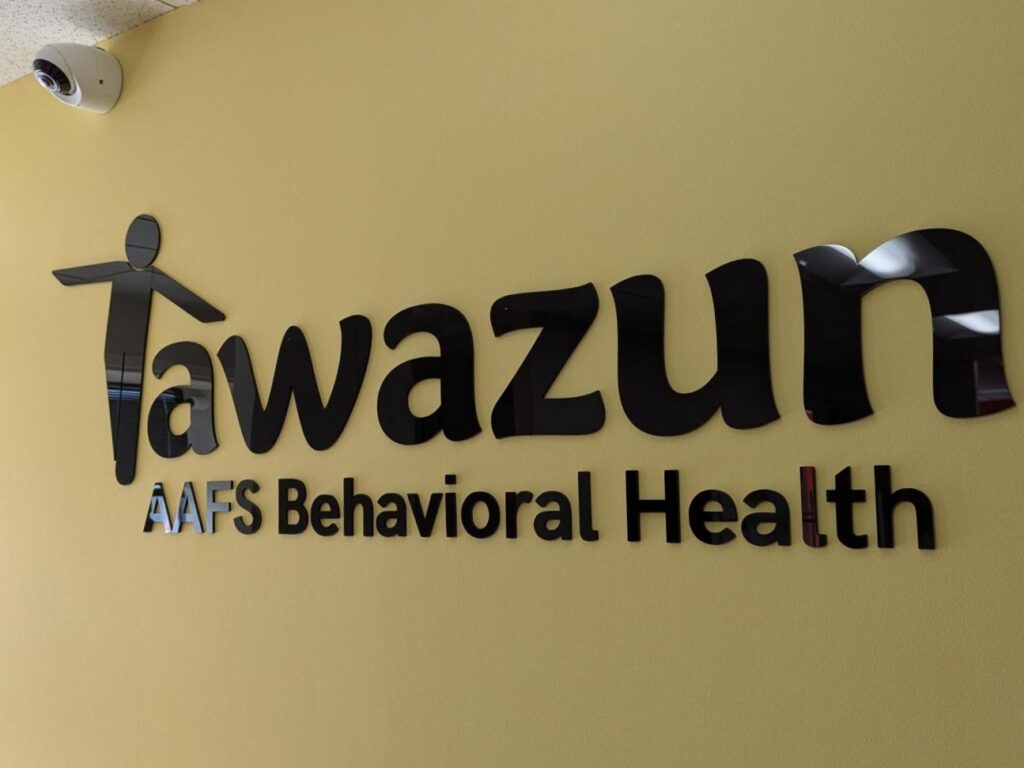
Tawazun Mental Health Clinic, opened by AAFS in late 2025.
Our grantee partners, Arab American Family Services and Inner City Muslim Action Network (IMAN), are providing culturally affirming mental health services for their communities whose experiences are not always reflected in traditional mental health systems through the new Tawazun Mental Health Clinic and the IMAN Health Center, respectively. When care is offered in one’s native language with culturally responsive context, it is not just more effective, but it also signals that their story matters and that support was built with them in mind.
In April, Sankofa Village Wellness Center opened its doors in West Garfield Park, providing comprehensive health support all in one place, including mental health services and breast and reproductive health cancer screenings from our grantee partner Equal Hope. The Sankofa Village Wellness Center is a physical location that prioritizes community health and fosters a sense of belonging.
Several of our grantee partners are providing mental health services and healing spaces for immigrant community members experiencing collective trauma in the wake of increased ICE activity across our service region since Fall 2025. Centro Sanar partnered with Chicago Public Schools in 2025 to facilitate “Parent University” workshops, which created space for parents to process their collective trauma, learn how to speak honestly with their children during frightening moments, and practice self and communal care. Our grantee partners are responding quickly to community needs in moments of crisis while building long-term community resilience, as we have seen through the work of rapid response groups across our region, such as HCF Responsive grantee Colectiva Las Boconas.
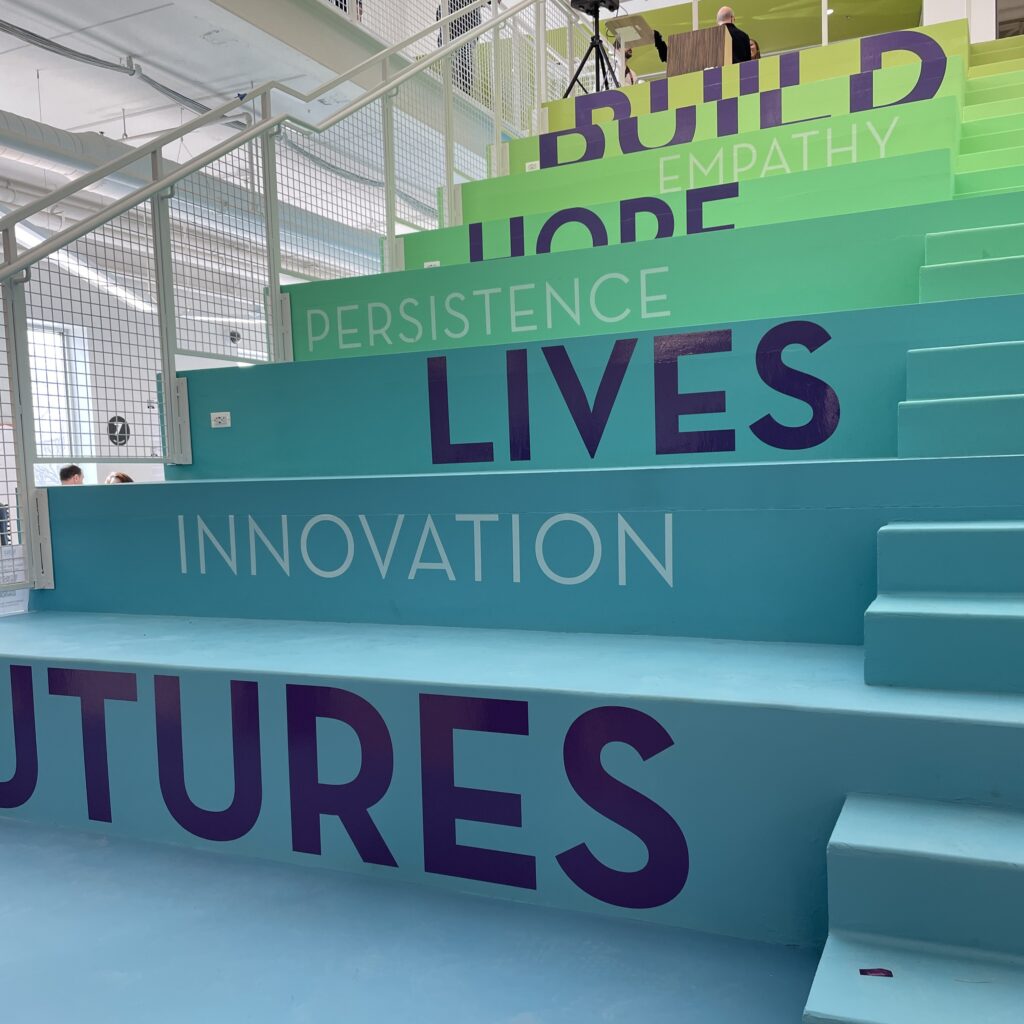
Main staircase in BUILD Chicago’s community hub.
Our partners Austin Coming Together and BUILD Chicago are investing in the future of the Austin neighborhood by transforming physical spaces into something the neighborhood has long deserved and needed to build strong connections amongst neighbors. Austin Coming Together recently opened the ASPIRE Center for Workforce Innovation after converting an old elementary school into a multi-use space offering workforce training, financial and legal support, and entrepreneurship resources. BUILD Chicago’s community hub offers community members free access to therapy, fitness, the arts, and more under one roof.
For LGBTQIA+ community members, especially Black and trans individuals, affirming spaces are about both comfort and survival, as transgender and gender diverse individuals have historically been left behind by systems due to transphobia and discrimination. Brave Space Alliance (BSA) and TaskForce Prevention and Community Services build queer- and trans-centered environments where joy and support are not separate offerings. TaskForce’s Vogue School and BSA’s Vogue University give young LGBTQIA+ people a space to learn voguing, a tradition rooted in Black and Latinx queer culture, which holds a legacy of resilience that has long offered community, expression, and belonging to those shut out of other spaces.
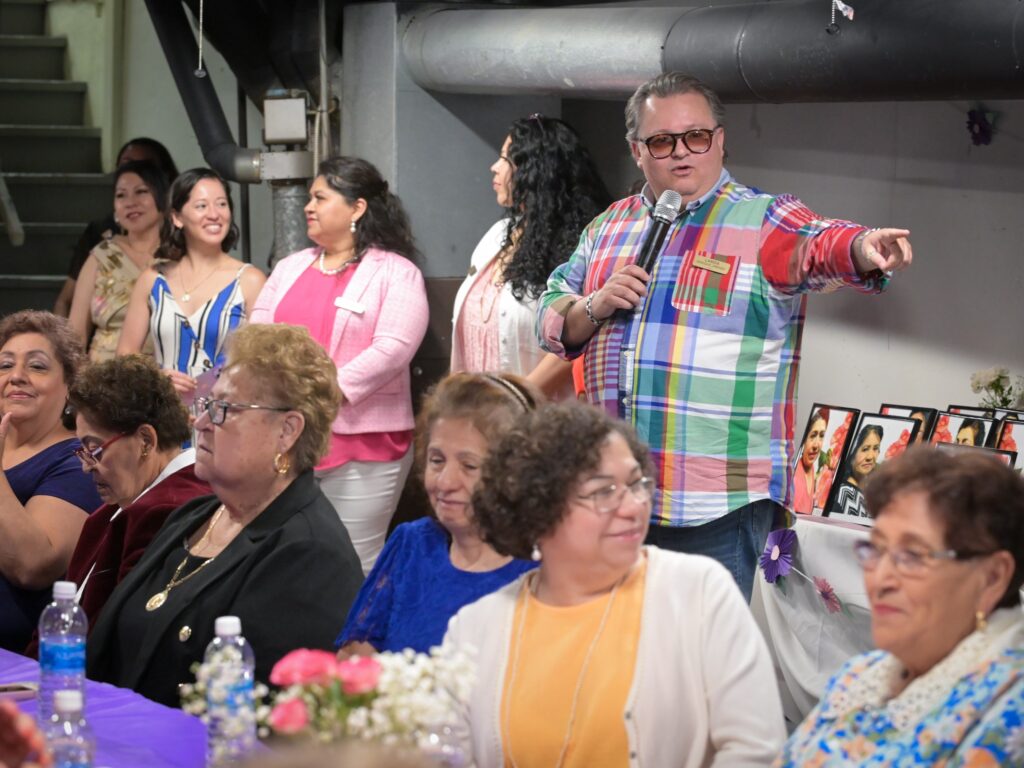
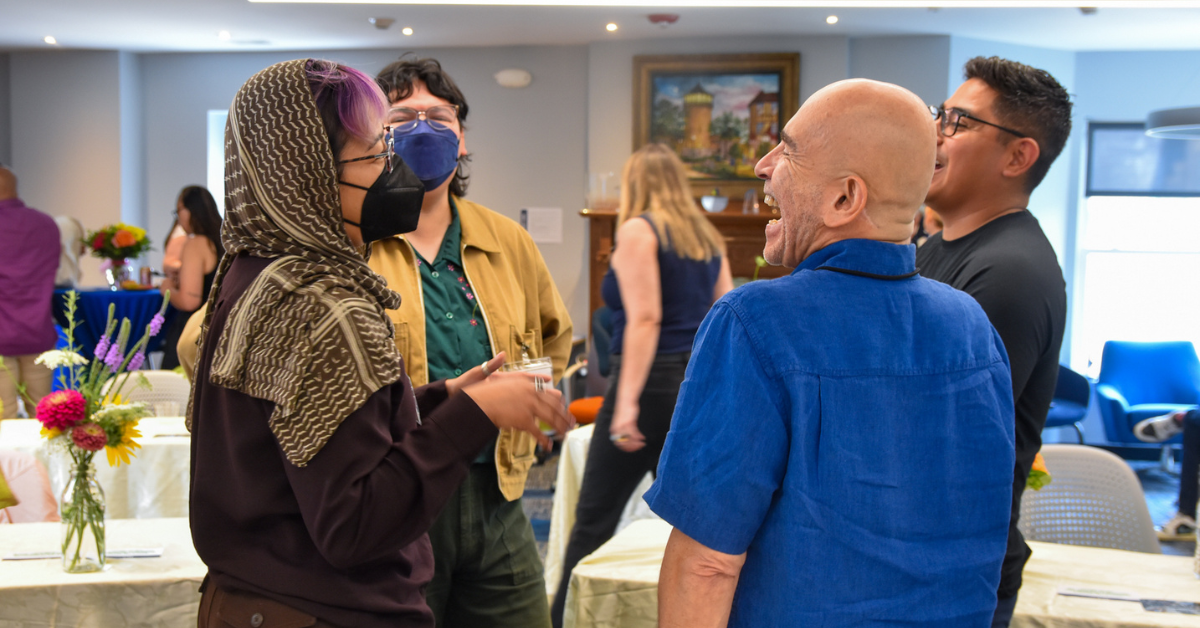
A community event, hosted by LAMDA, in 2023.
For older adults, the presence or absence of community is often the difference between declining and thriving. The Latinos Alzheimer’s Memory Disorders Alliance (LAMDA) creates space for older Latine adults and their caregivers to connect through art classes, fitness programming, memory cafes, and more, and are designed to gather people and actively support memory and cognitive health through social connection.
Read a past piece we shared about LAMDA’s approach to equitable dementia care.
Latino Unity Day, organized by the Latino Policy Forum, is belonging in action. Each year, hundreds of Latino community leaders, advocates, and allies gather in Springfield for policy discussions, legislative visits, and collective action on the bills and budget priorities that matter most to Latine individuals and families across Illinois. It is an advocacy day, but it is also a demonstration of shared identity and proof that when people feel connected to a community, they show up for it.
These spaces and programs exist because our grantee partners looked at what was missing and built it themselves. Many of our partners understood that health inequities in their communities demanded urgent action, and in responding to those needs, they created something powerful: spaces of belonging. Built with intention, creativity, and deep commitment, these spaces have addressed physical and systemic gaps in health but also have become refuges for mental health and healing and places for civic life. In these spaces, people gather, heal, and remember that they belong to themselves and to each other — and that they are worth showing up for.