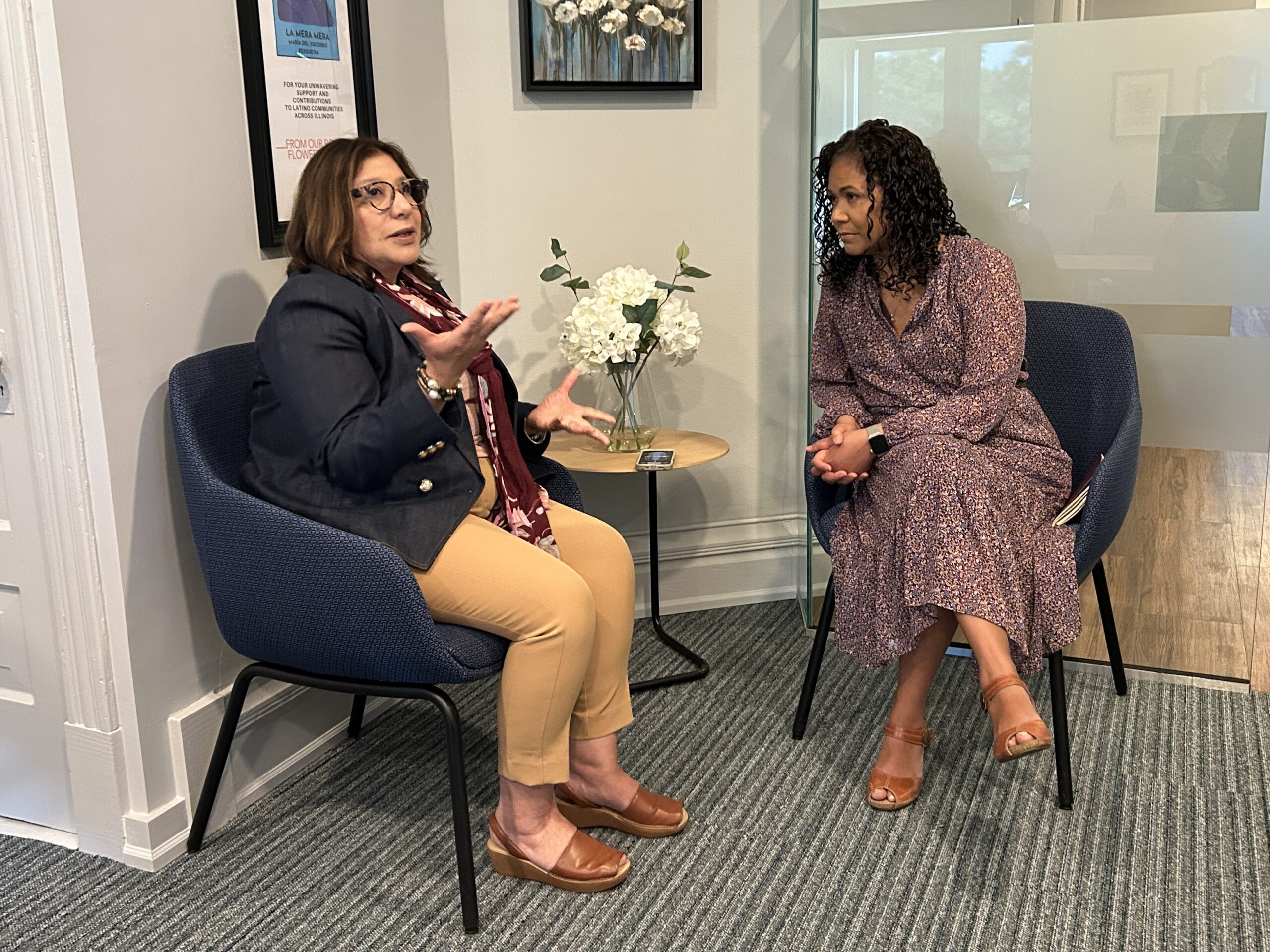
As Dr. Yesenia Yepez reaches the halfway point of her first year as Board Chair, she joins HCF President Maria Pesqueira to reflect on what it means to lead with community at the center as the Foundation enters an evolving moment in its trajectory. Together, they discuss investing in long-term partnerships, using data to guide decisions, and understanding why civic health, resilience, and lived experience are essential to building healthier communities.
This conversation has been edited for length and clarity and was reviewed and approved by both participants for accuracy.
Meet Our Board Chair
Maria: Thank you so much for having this conversation with me, Dr. Yepez. I thought it would be great to chat as we near the first six months of you being Board Chair.
When you joined the Healthy Communities Foundation Board, we had just restarted, and your name came up a few times, from both staff and Board members at the time, about the work you were doing in the Berwyn and Cicero areas to influence and engage health providers on the needs you were seeing with your patients. So, I knew I had to meet you and was so pleased when you said you were interested in becoming more involved.
In 2019, you were the first HCF board member not appointed by the Attorney General to join the Board. There is also so much pride that you are homegrown, in a sense.
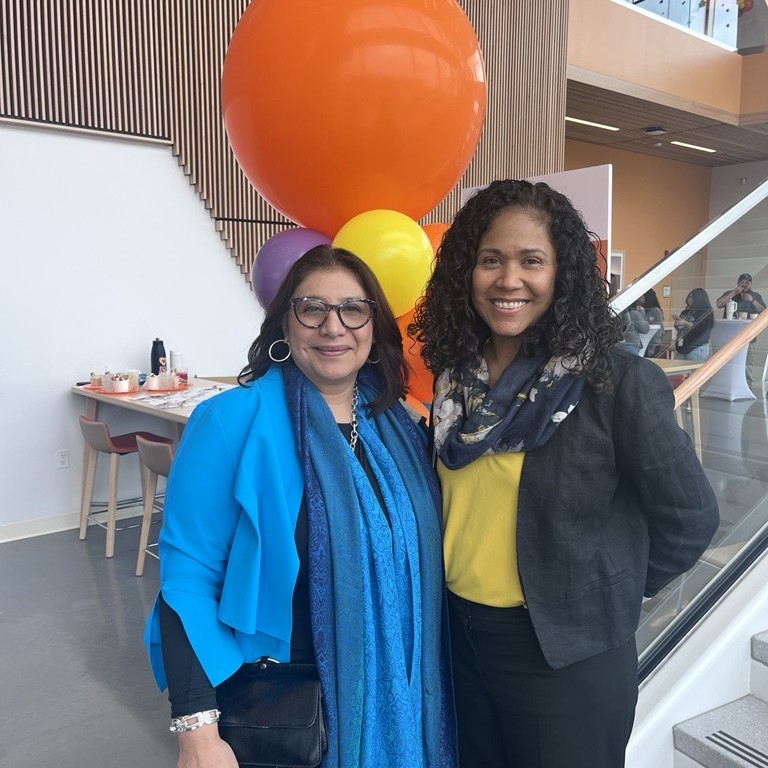
Maria and Dr. Yepez at Esperanza Health Center’s South Building Ribbon-Cutting Ceremony in 2024.
Maria: You worked at MacNeal Hospital at the time, where our legacy endowment comes from, and you live right at the center of our service region.
Dr. Yepez: Yes, over 20 years! I live a couple of blocks from MacNeal Hospital.
Maria: So, you are a community member and a health provider to community. And now, you are working with another health provider in our region that has been pivotal in community health work. But going back to when you first joined our Board, what about the Healthy Communities Foundation pulled you in and has kept you involved?
Dr. Yepez: I like that I get to be part of the work that this Foundation does, that I know 100% impacts every patient I see every day. I like being a part of what is going to help sustain that work long-term and make a real impact on the community. My involvement with the Foundation is not separate from my work; it adds on to what I have committed to for my entire career, and it is an absolute joy to work with the HCF team and see the work that is done with love, compassion, and integrity, and with every Board member who shows up and brings their expertise and is committed to this work as well. It has been an incredible honor and something I am going to be really proud of at the end of my career.
Maria: You talked about being a physician, but you are also a teacher and a mentor to new physicians. As our Board Chair, you also bring that lens to work and to the future providers you train. How has that perspective shaped the way in which you think about the Foundation and how you see it fulfilling its mission?
Dr. Yepez: I think about when we got to take a group of resident physicians in the HCF service area, along with a group of community and grantee partners, to the Facing Race Conference1 [in November 2024]. I loved that [the resident physicians] experienced that, not just serving our region while they are here, but taking that knowledge to other communities that need physicians who understand the challenges our patients face outside of the exam room.
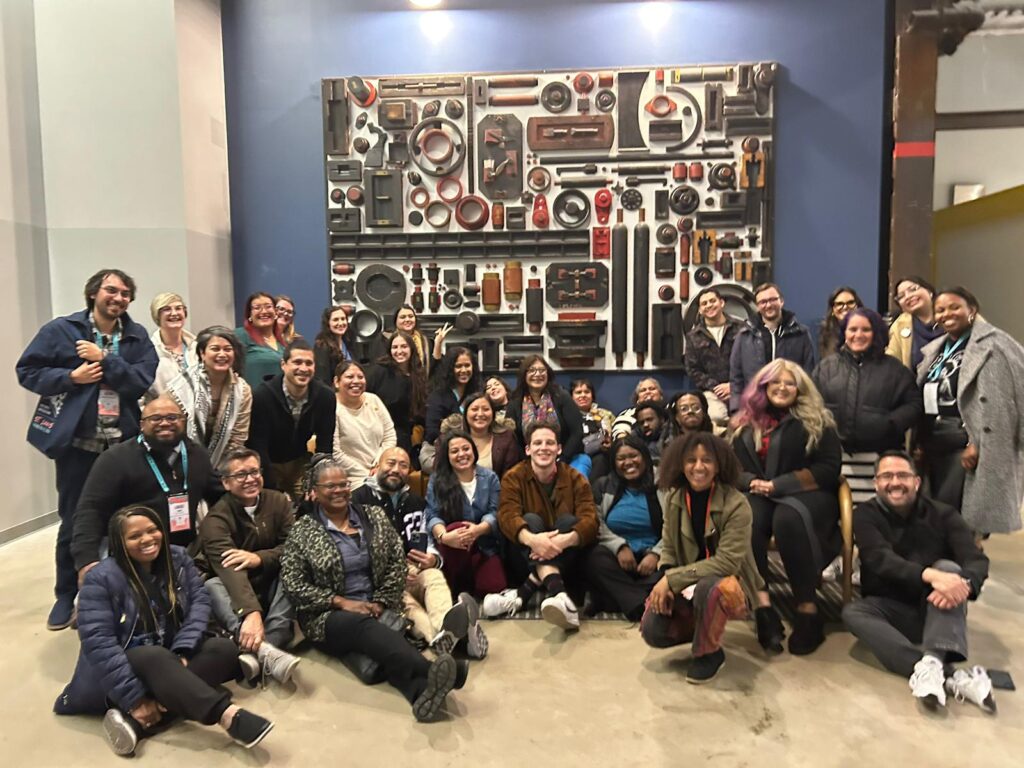
HCF’s delegation at the Facing Race Conference in November 2024.
Dr. Yepez: What also resonates from the work of HCF—I cannot duplicate myself. There’s only so many hours in the day, but I get to duplicate that knowledge in like-minded physicians who have the same heart and passion to serve communities, and I get to help them do it well. I love being able to replicate that and see the fruit over many years in the community. So, when we talk about the Foundation’s work, the questions become: How do we leverage our impact? How do we help our partners multiply what they have already done successfully?
From the lens of an educator and someone who has been involved in Federally Qualified Community Health Centers, the policies and the grants that support teaching health centers nationally and in our region are really critical. I can train a resident physician within a well-resourced hospital system—they can read and take classes on all the greatest and latest medical advances we can offer patients today. But that will never teach and prepare them to practice in our communities, with the limitations and challenges that our patients face. That’s an entirely different skill. If they don’t see it mentored, they will never be able to duplicate it; it will feel overwhelming and impossible, and they’ll leave to serve somewhere else. But, if they have mentors that train them and prepare them, they learn that this work is not only rewarding and meaningful, but doable and possible. That’s what helps create long-term change.
Why Multi-Year, Unrestricted Funding
Dr. Yepez: What have we learned as a foundation over the last six years, and the trajectory of how we show up as partners in our service region?
Maria: I think about the polycrises in our region—from the pandemic, to the migrant wave, to the ongoing economic challenges, the impacts of cuts to Medicaid and SNAP. Our grantee partners have continued to be present to the needs of community, and our role as a foundation is to be in partnership with them. What we have heard from our partners is that multi-year, consistent, unrestricted funding is important for them to plan. When our staff told the Board that we wanted and needed to go deep to support and be in partnership with our communities during a challenging time, the Board understood the importance of being in full partnership and made the $22 million commitment for five-year grants—to what we call our multi-year partners—back in December 2024.2 We are currently in the second year of that five-year cohort support.
Dr. Yepez: As a former grantee from other organizations, I remember we would write grants and hope we get one for one year, maybe two if we were fortunate. We would spend half the year reporting on whether it made a difference, just so they would fund us again next year. The amount of effort and time it takes to sustain that and how much time that takes away from doing the work that needs to be done in community. So, I’m proud of the Foundation and our Board for saying: let’s remove that barrier and find a way to support our partners. Let’s build their capacity and fill in the gaps. Let them use the funds where they need to. If you need the funds to retain or recruit staff, use it that way. Staff were able to bring back to the Board learnings and the words, “Let’s do more.” The Board said, “Let’s increase what we are giving, but extend the number of years in our grant commitments to multi-year partners.” We want to be a long-term partner with those who are engaged and have trust in their communities, who will stay with the community throughout all crises and toward long-term outcomes.
Maria: Our Board was very wise to do that early on. Our team is very intentional about how we walk in partnership with community. While we are no longer supporting one-year grants after this year, we understood the importance of going deeper with multi-year partners. That meant some difficult choices, but it also presented an opportunity to explore what our support can look like in a moment where civic health and engagement is critical to protecting democracy in our region, and to understanding its connection to community health.
While we may not be giving annual grants, we still want to engage with and learn from organizations who are doing innovative work in our region.
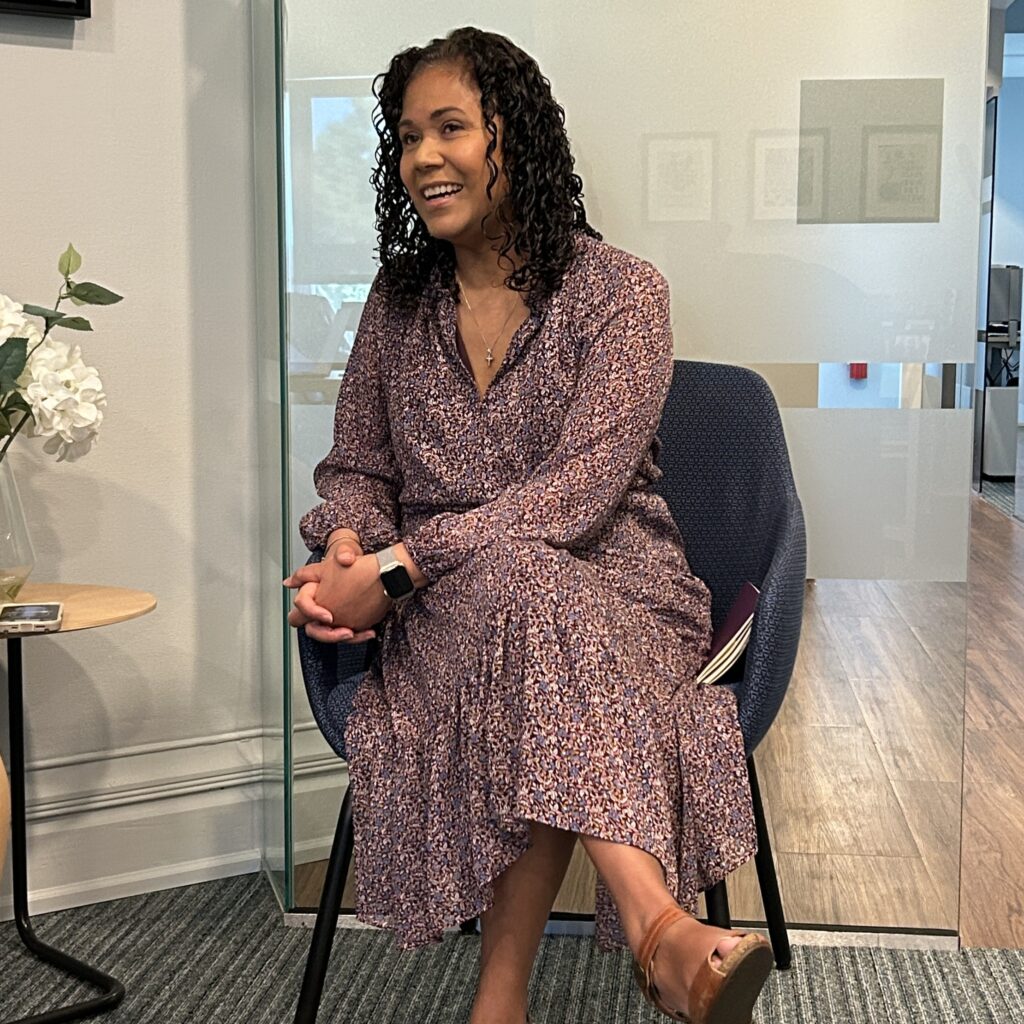
We want to be a long-term partner with those who are engaged and have trust in their communities, who will stay with the community throughout all crises and toward long-term outcomes.
Dr. Yesenia Yepez, HCF Board Chair
Dr. Yepez: One thing I love about our approach is how we partner with other foundations and thought leaders, not just locally but nationally. That helps bring awareness and investment to the things we are talking about—the infrastructure needed in communities, the importance of civic voice, bringing community health workers into the right spaces to be trusted voices. We may not be the largest foundation in this area, and because of that, I think we have been very mindful to use that lever for greater impact.
Maria: I think that part of our role has been to lift the work of our region to other funding partners. From the early days of the pandemic through today, there have been more partnerships, more collaborations, and more resources coming into our region as a result. So, you’re right, Dr. Yepez. The Healthy Communities Foundation alone, as one grantee partner alone, cannot make systems change happen in isolation. That will take partnerships, collaborations, and a long-term plan.
Dr. Yepez: I’ve appreciated the Foundation’s focus on capacity building for its partners. When there is so much need, it’s hard for grantee partners to find the funds to invest in a longer-term strategy to build their internal skills or infrastructure, so they are around for the communities they serve. I see that in our five-year grantee partners—we are deepening relationships we’ve already built, while staying open to learning about other work and new opportunities in the region.
Staff are actively engaged with them, walk with them, and understand what is happening in the region through their eyes. I think one of the advantages of being an organization our size is that we can shift quickly when a new threat arrives, and adjust our funding priorities for what our communities are struggling with most right now.
Maria: It’s the flexibility and the nimbleness we want to provide our grantee partners that the Board holds as especially important in doing this work. If we start in one direction, and the data and partner context tell us we need to go deeper, then we go deeper in that direction. The nimbleness of our staff is possible because of the trust and partnership we have with the Board and our partners.
That has included supporting organizations through moments like during the height of Operation Midway Blitz last fall (2025), and understanding what that meant for the trauma residents carried and the mental health needs of our region. Some of our support went directly to addressing the trauma that grantee partners’ staff themselves were experiencing. General operating support is important, but so is thinking about what is needed for community and organizational resilience, like scenario planning, legal support, technology, and security needs — all the infrastructure it takes for an organization to do its work.
Read our grantee partners’ coverage about Operation Midway Blitz:
- It Was An Act Of Solidarity’: A Community Health Worker’s Mission to Adapt Care During Midway Blitz” by Borderless Magazine
- ‘We Can’t Live in Fear’: How a Cafe Owner Showed up for Community and Himself by Borderless Magazine
- “High School Students Broke Silence at Board Meeting Amid Ongoing Local ICE Raids” by Cicero Independiente
- Feds Used Tear Gas, Pepper Spray Dozens Of Times In Chicago — Even After Judge Said To Stop by Borderless Magazine & Cicero Independiente
The Data Behind the Decisions
Dr. Yepez: It has been one of my favorite things, as a Board member and as a Program Committee member, to see how we approach understanding the impact of our support. These are challenging things to measure. Pre-pandemic, we were attempting to understand our impact, then the pandemic hit, then flooding in the Cicero/Berwyn area, then rising unemployment and immigration enforcement challenges—each one a new setback just as communities began to recover. What statistics do we look to, to say our support is making an impact, that our communities are thriving? I wish we had a statistic for resilience, because that is what we see from communities every day.
Maria: That brings to mind the health assessment we did for our service region, using health rankings that looked at every zip code in our region—back in 2018 and most recently in 2024. I recall looking at communities right next to each other, like Maywood and River Forest, which have very different health outcomes. It was clear that systemic investment and infrastructure are central to the health of communities in the region. When we looked at data two years ago compared to 2018, there weren’t necessarily improvements in some of these zip codes. That’s not surprising, given the pandemic and the crises we’ve had. But what became clearer was the layered, systemic disinvestment in these communities.
What we have been discussing with you and the rest of the Board and Program Committee is what our role should be right now—whether to influence, convene, or collaborate—so we can find the resources for community-informed, community-engaged work to address the health system disinvestment in our region.
Dr. Yepez: As physicians, we are learning what health equity really means in our work. Typically, you’re trained in medical school to see a 38-year-old patient through race, age, sex, and link that to a chronic condition. We are relearning how implicit bias makes its way through medicine. But when I saw the HCF health rankings data, as a board member, I thought, “Wow, it probably would be easier—and more accurate—to say this 38-year-old patient is from this zip code.” That data is so powerful, so much more indicative of health outcomes and lifespan than age or sex. That’s heartbreaking.
Maria: The data didn’t show a lot of movement in some of our zip codes [compared to 2018]. If anything, the zip codes with positive health outcomes continued to be the ones already considered the healthiest. What is clear is that systems change takes time and doesn’t happen overnight. The pandemic unveiled a lot of the systemic inequities already in place, and because it affected everyone, it became even clearer that my health and your health are connected. That time also sharpened our awareness of the importance of looking upstream—investing in what affects health outcomes and listening to what our partners need to help create that change.
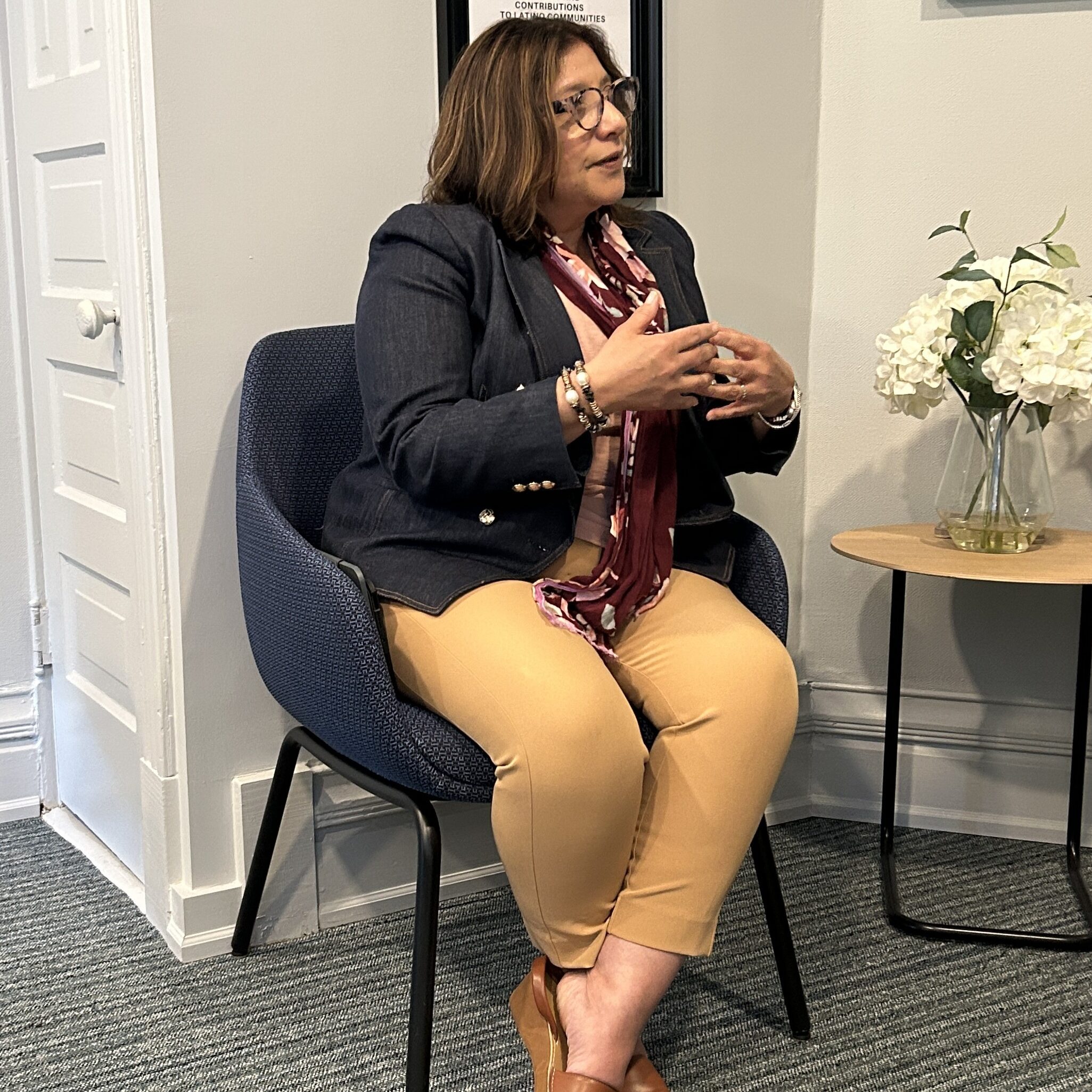
If we start in one direction, and the data and partner context tell us we need to go deeper, then we go deeper in that direction. The nimbleness of our staff is possible because of the trust and partnership we have with the Board and our partners.
Maria Pesqueira, HCF President
Civic Health is Community Health
Dr. Yepez: Maria, the team shared with us a connection they made with the health rankings assessment—that the areas in our region with the highest health rankings were also the communities with the highest levels of civic engagement. When we looked at the communities with the worst health outcomes—traditionally, for decades—that data started to be hard to ignore.
Maria: We were definitely intrigued. When we think about health and civic participation, and the correlation between the two—comparing a zip code like Western Springs to another zip code where civic participation was not as prominent—we can’t negate the data that says there is a correlation between community health and civic health. While we don’t have all the answers yet, we know it is important to explore ways to invest in civic health, and to keep listening to community partners on how best to invest and partner with others to increase civic engagement, especially in zip codes with the worst health outcomes.
Dr. Yepez: What are you hearing from our grantee partners about what civic engagement means to them? How have you seen it modeled in our region?
Maria: Each organization looks at it differently—it’s a spectrum. Some are thinking about census participation. Some have looked at legislative advocacy days, educating legislators on issues impacting community health and well-being. Some are using health promoters—community health workers—not only to connect residents to resources, but to link them to opportunities for civic engagement. We are learning from our partners on this journey to build and strengthen civic health across our region for a healthy democracy.
Dr. Yepez: When our communities went through the challenges they recently faced, back-to-back, it was fear on top of fear and intimidation that worsened health outcomes. Calling a patient night after night, trying to convince them to please go to the emergency room after reviewing their labs. The answer I got back was “I’m afraid to go to an emergency room. I’m afraid to go to my doctor’s appointment. I’m afraid to pick up my child from school.” Fear and intimidation in our communities’ broke trust, limited access, and undoubtedly worsened health outcomes. How does HCF see their work moving forward supporting community resilience?
Maria: You brought up good examples of systemic and policy gaps. The fear of going to the ER, the fear of taking your child to school, of driving, that is the trickle-down-effect of federal-level policies into local immigration enforcement and violence in our region.
When we talk about housing, the cost of housing in our region and across the country comes down to a shortage of affordable housing. When we think about the access to food, we know that H.R.13 will affect people’s access to food and Medicaid coverage. Just as the pandemic shed light on systemic inequities, we are entering a moment where current policies are shedding light on those inequities again, and why long-term systems change requires people participating and engaging civically toward that change. We, as HCF, are still learning about this work in our region, and what our role is: to invest in partnerships with grantee partners and with others in philanthropy to build and strengthen community’s ability to fight against these inequities.
In Their Own Words
Maria: I appreciate how you bring in your lived experience into your role as Board Chair—not just as a community resident, but through the lived experience of healing, of seeing individuals who come to you for their health, and of influencing future providers to understand this too.
Maria: What would you like for our grantee partners to know about HCF, based on your perspective?
Dr. Yepez: What I am most proud of right now is that the Foundation is open to learning more about community needs, and about everything that goes into wholeness and wellness, not just medical health but mental health, and what it takes to give our community members a real opportunity to live a joyful, full life, without structural inequities standing in the way. That’s the dream, but we can’t get there alone. We need partner foundations, we need our grantee partners who are trusted connections to our region’s communities.
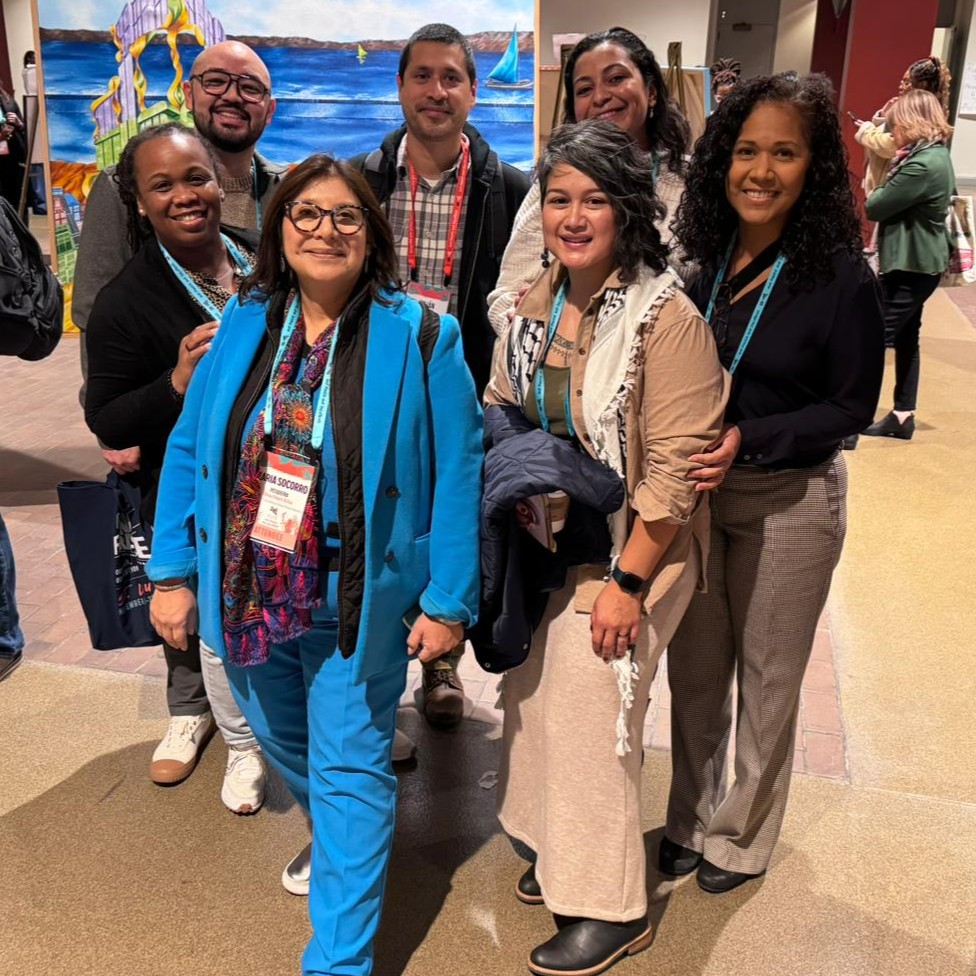
Community leaders with HCF staff at the 2024 Facing Race Conference.
Maria: That is exactly why it is important for our Board members to have lived experience like this. Every one of our Board members has a connection to community, and so does our staff. One of our Board members shared that she did not want her son to walk home by himself, so she drove him everywhere when Operation Midway Blitz was underway.
Dr. Yepez: I work in the community, and I remember digging out my passport from the safe.
Maria: It was a tough time and still is for our communities. We are a learning foundation—we look at data, but we also balance that with lived experience and stories that help us contextualize resilience.4 Resilience itself may not show up in the data, but how else can we know it but through stories? The narratives of community are an important part of our work, too, and we try to lift them up in many ways.
One of our program managers spoke with Senator Durbin earlier this year to talk about the impact of legislation on foundations and the ripple effects of not being able to give grants to organizations. We have also submitted public comments on behalf of the Foundation against proposed rules changes that could affect someone’s ability to access food.
Dr. Yepez: We are learning how we can advocate and learning from our partners—they know how to do it and have been doing it. We want to hear from them so we can lift up their efforts. It may not always be in grant dollars. It may be through relationships, through our influence as a foundation, or through our ability to convene partners around a table to learn from each other.
Maria: I also think about the work foundations are doing across the country, like our involvement with the national coalition, Unite in Advance.5 What’s become clear is what you just shared—that hyperlocal narratives are particularly important data and are highly influential. When people hear the lived experience of an individual, it humanizes work, and that influences policy, which influences systems. At HCF, we see our role from a hyperlocal perspective, one that can also inform national work to address the needs of our region.
Dr. Yepez: For our region and our work as a foundation, I’m looking for a deeper partnership with our grantee partners and to learn more about their audacious goals. How do we eradicate diabetes in our communities? How do we shift the lifespan in our communities? How do we create healthier communities? I want to look to them because they bring solutions to those questions that we can be excited to support.
- Race Forward’s biennial Facing Race conference brings together racial justice leaders, organizers, advocates, and community practitioners from across the country for shared learning on racial equity, healing, solidarity, and systems change. HCF sponsored a local delegation in November 2024, which included local community leaders and health leaders, HCF board members and staff. This sponsorship was part of the Foundation’s strategy refinement toward civic health and community power-building and helped deepen relationships across the region, expose participants to models from other communities, and explore how racial justice learning could inform long-term investments in community leadership, organizing infrastructure, and health equity. ↩︎
- In 2024, HCF launched five-year partnerships with 32 organizations, representing a total commitment of $22 million in general operating support. HCF’s commitment to multi-year funding originally began as a three-year investment with the first partner cohort in 2021. The Board extended it to five years for the Foundation’s second partner cohort to reflect its belief that systemic change takes time, and that stable, flexible funding helps partners remain responsive to emerging challenges, strengthen their teams and infrastructure, and advance community-driven solutions that address the root causes of health inequities. At the end of 2025, the cohort entered Year 2, with $4.45 million awarded. ↩︎
- H.R.1 introduced major federal changes to safety-net programs, including Medicaid and SNAP, with implementation beginning in 2026 and 2027. For the HCF region, where many residents and grantee partners already navigate barriers to health care, food access, and economic stability, these changes are expected to increase pressure on community-serving organizations, health providers, and public agencies as residents face new eligibility rules, work requirements, and potential loss of coverage or food benefits. ↩︎
- We have sought to understand how partners continuously invest in their resilience – that is, their ability to adapt and respond to community context. This requires continuous investment in the leadership and well-being of the people who carry out the organization’s mission, and also in organizational infrastructure and programs. The majority of our grantmaking is general operating support in recognition of the benefits of flexible resources. Learn more here. ↩︎
- Unite in Advance is a solidarity campaign that is comprised of a coalition of philanthropic organizations, including private, family, and corporate foundations. This coalition came together in early 2025 to protect the sector’s First Amendment right to give to essential programs and services and ensure continued support for communities across the US. Numerous foundations signed onto the campaign, including Healthy Communities Foundation which has continued to be an active coalition member. ↩︎